

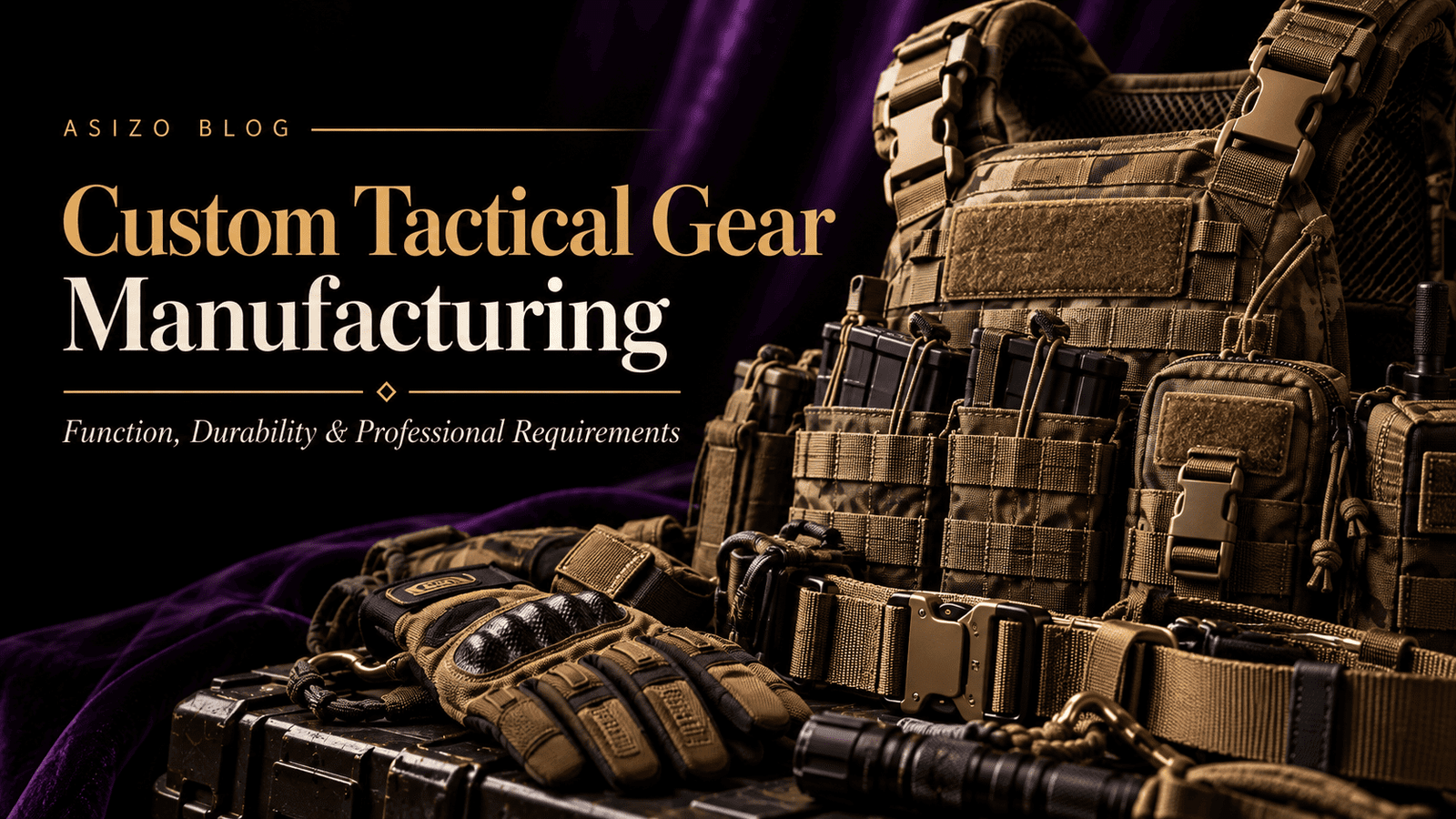
Tactical equipment is designed around functionality. Unlike purely decorative products, tactical gear must combine practical construction, suitable materials and thoughtful placement of components.
For professional buyers, distributors and organizations, understanding these factors is important when developing custom tactical products.
Start With the Intended Use
The first question in tactical gear development should always be how the product will be used.
A plate carrier, tactical vest, chest rig or utility pouch may require different construction depending on the intended environment and equipment configuration.
Understanding the application helps determine the appropriate materials, dimensions and attachment system.
Materials and Construction
Tactical products are frequently exposed to repeated handling and demanding conditions.
Fabric strength, stitching quality, webbing, buckles, hook-and-loop components and internal reinforcement can all affect the performance and durability of the final product.
Material selection should therefore be based on functional requirements rather than appearance alone.
Custom Configuration
Professional users may require specific pouch arrangements, dimensions, colors or attachment points.
Custom manufacturing allows the product to be developed according to these specifications instead of forcing the customer to adapt to a standard design.
Reference samples, sketches and technical drawings can make the development process more efficient.
Bulk Manufacturing Requires Consistency
For distributors and institutional buyers, repeatability is especially important.
Each item should maintain consistent dimensions, stitching and component placement throughout production.
At ASIZO, our approach to tactical manufacturing focuses on clear specifications, disciplined production and practical customization to support both specialized and larger-volume requirements.
